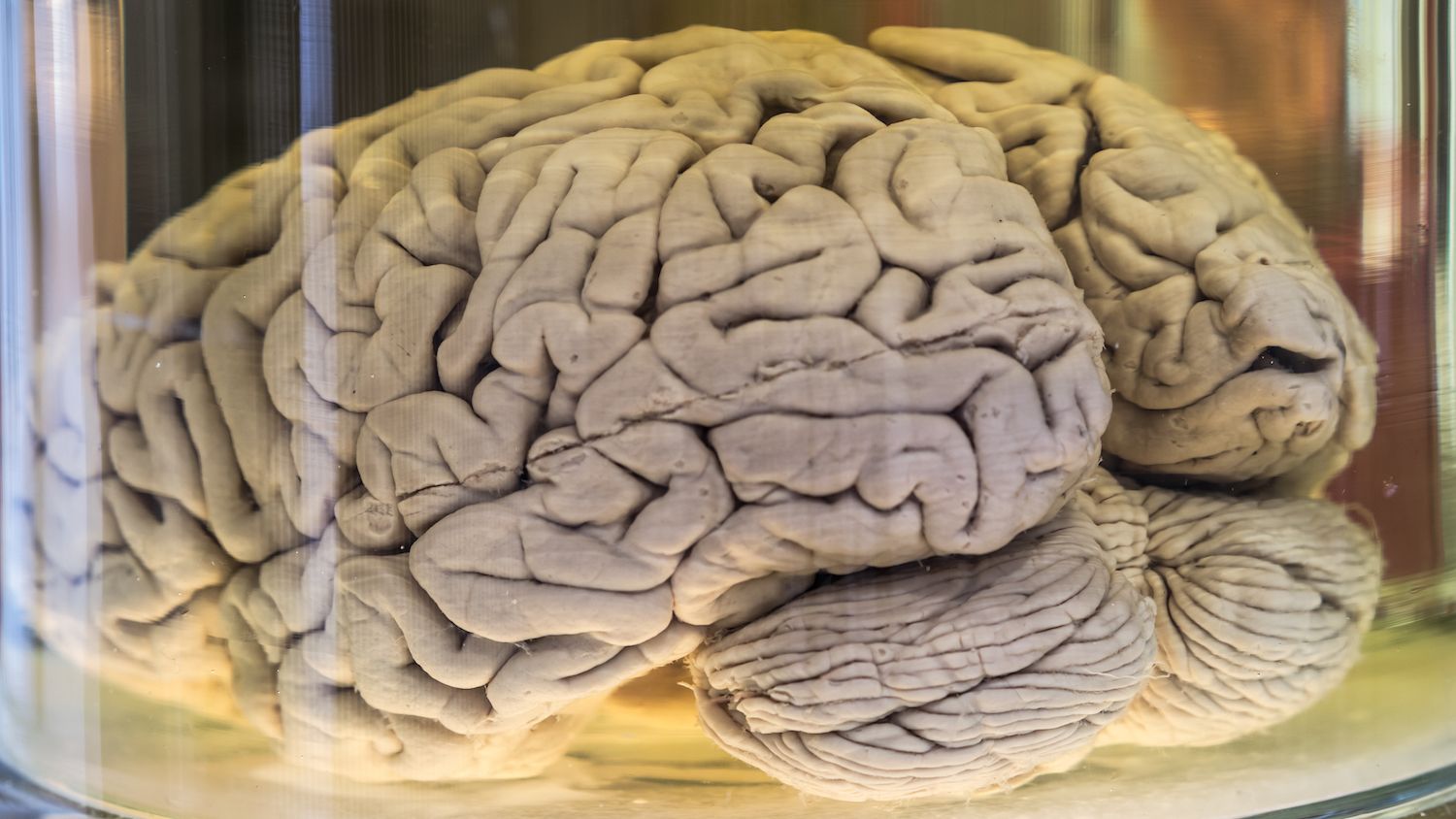
Unraveling Brain Folds: The Mystery of Girification Explained
Imagine crumpling a flat sheet of paper into a tight ball. What you've created is a compact object with a surprisingly large surface area, full of ridges and valleys. This simple act offers a fascinating parallel to one of the most remarkable feats of biological engineering: the development of the human brain. Our brains, far from being smooth, are intricately folded, a characteristic that is fundamental to our advanced cognitive abilities. This process, known as girification, transforms a simple, smooth structure into the complex landscape we recognize, packed with billions of neurons. But why did our brains evolve this way, and what happens when this intricate folding goes awry, resulting in a cerebro liso or smooth brain?
The Evolutionary Imperative: More Power, Less Space
For centuries, the convoluted surface of the human brain has fascinated scientists. The prevailing scientific consensus points to evolution as the primary driver behind this remarkable folding. As species evolved, there was an increasing demand for greater cognitive capacity. This meant needing more cortical surface area to house an ever-expanding number of neurons – the building blocks of thought, memory, and perception. However, there's a practical constraint: the size of the skull. Evolution's ingenious solution was to fold the brain, much like folding that sheet of paper. By doing so, a significantly larger cortical surface could be packed into a comparatively smaller cranial cavity.
This increased surface area translates directly into enhanced processing power. More folds mean more neurons can connect and communicate, leading to superior abilities in receiving, processing, and storing information. This advantage isn't unique to humans; many highly intelligent mammals exhibit similarly elaborate brain folds, including dolphins, elephants, and monkeys. The intricate patterns seen in these species highlight a shared evolutionary path towards maximizing brain function within anatomical limits.
Early assumptions about brain folding were often oversimplified. For a time, it was believed that larger brains automatically equated to more folds. Indeed, smaller mammals like mice and rats typically have remarkably smooth cortices. However, this theory quickly met challenges. Dolphins, for instance, possess brains comparable in size to humans but boast nearly twice the number of folds. Conversely, while human cortices contain three times more neurons than those of elephants, elephants exhibit far more folds. These intriguing discrepancies underscore that the relationship between brain size, neuron count, and folding complexity is far from straightforward, revealing that the precise mechanisms driving these variations across species remain a significant area of scientific inquiry. To delve deeper into these fascinating differences, explore Brain Folds: Evolution, Species Differences, and Cognitive Power.
Girification: The Brain's Masterpiece of Development
Girification is the sophisticated developmental process responsible for shaping the characteristic gyri (the elevated ridges) and sulci (the sunken grooves) of the cerebral cortex. This crucial transformation doesn't begin immediately after conception. For the first 20 weeks of fetal development, the human brain remains largely smooth, resembling the brain of a mouse more than the complex organ it will become.
It's only around the fifth month of gestation that a dramatic shift occurs. The cortical surface undergoes an immense expansion, primarily driven by an exponential increase in the number of brain cells, particularly neurons and glial cells, in specific layers. This rapid proliferation and migration of cells create immense pressure within the confined space of the skull. As the outermost layers of the cortex expand faster than the underlying white matter, the brain buckles and folds, much like a growing fabric too large for its frame. The first major gyri and sulci begin to appear, gradually elongating and branching out to form the incredibly complex, individualized pattern of folds observed at birth.
Scientists are actively investigating the molecular mechanisms that orchestrate this complex process. One molecule that has garnered significant attention is Trnp1, which is believed to play a critical role in regulating the expansion of the cortical surface and the subsequent formation of folds. While some minor folding can continue after birth, the vast majority of our brain's intricate topography is established before we enter the world, setting the stage for a lifetime of learning and experience.
The Peril of a Cerebro Liso: When Folds Don't Form
The intricate folding of the brain is not merely an aesthetic marvel; it is absolutely essential for higher human function. To illustrate this critical importance, consider the profound implications of a cerebro liso—a smooth brain—a condition often referred to as lissencephaly. Lissencephaly is a severe neurodevelopmental disorder characterized by the absence of normal brain folds, resulting in a smooth cerebral surface.
In a healthy human brain, the folds dramatically increase the surface area, allowing for a vast network of connections necessary for complex thought, motor control, sensory processing, and language. A cerebro liso, by stark contrast, lacks this expanded surface, severely limiting the brain's capacity. The clinical consequences are devastating. Individuals born with lissencephaly typically suffer from profound developmental delays, severe intellectual disability, and significant motor impairments, often unable to even sit unassisted. Neurological symptoms such as rapid, incessant eye movements, an inability to make eye contact, and frequent, debilitating seizures are common. The case of the eight-year-old child examined by Jean Marc Pinard in 1989, whose brain MRI showed a completely smooth surface, tragically embodies these severe challenges. Without the crucial folds, the brain simply cannot process information and coordinate functions necessary for a normal human life.
The stark difference between a healthy, folded brain and a cerebro liso underscores the fundamental role of girification in our cognitive and physical capabilities. Understanding these critical differences can shed light on the fragility and complexity of human development. For a deeper understanding of this vital topic, explore Why a Smooth Brain Isn't Healthy: Essential Folds for Human Function.
Beyond the Obvious: Unanswered Questions and Future Frontiers
Despite significant advancements in neuroscience, many mysteries surrounding brain folding persist. The precise mechanisms that dictate the number, depth, and specific patterns of folds remain largely unclear. Why do some species, like dolphins, have more folds than humans despite similar brain sizes? Why do human brains, with their higher neuron count, have fewer folds than elephant brains? These questions highlight that brain folding is not solely a matter of raw size or neuron density but involves a complex interplay of genetic, cellular, and mechanical factors that we are only beginning to comprehend.
Current research employs cutting-edge techniques, including advanced imaging, genetic sequencing, and computational modeling, to simulate brain development and identify the critical genes and proteins involved. Scientists are also studying rare genetic disorders that affect brain folding to pinpoint the precise molecular pathways. Understanding these mechanisms could not only unravel a fundamental aspect of brain development but also open new avenues for treating conditions associated with abnormal cortical development, such as lissencephaly, microcephaly (abnormally small brain), and polymicrogyria (too many small folds).
The journey to fully unravel the mystery of girification is ongoing. Each discovery brings us closer to understanding how our brains achieve their incredible complexity and what makes human cognition so unique. The intricate dance of cell proliferation, migration, and mechanical forces that culminate in our beautifully folded brains continues to be one of biology's most captivating puzzles, promising profound insights into what it means to be human.
Conclusion
The development of brain folds, or girification, is a cornerstone of human intelligence and function. From the evolutionary pressures that favored greater cortical surface area to the intricate cellular processes that orchestrate its formation, the story of our brain's topography is one of incredible biological sophistication. The implications of this folding are profound, as evidenced by the severe challenges faced by individuals with a cerebro liso. While much remains to be discovered about the nuances of girification and its variations across species, ongoing research continues to shed light on this vital developmental process, ultimately enriching our understanding of the most complex organ in the known universe.